
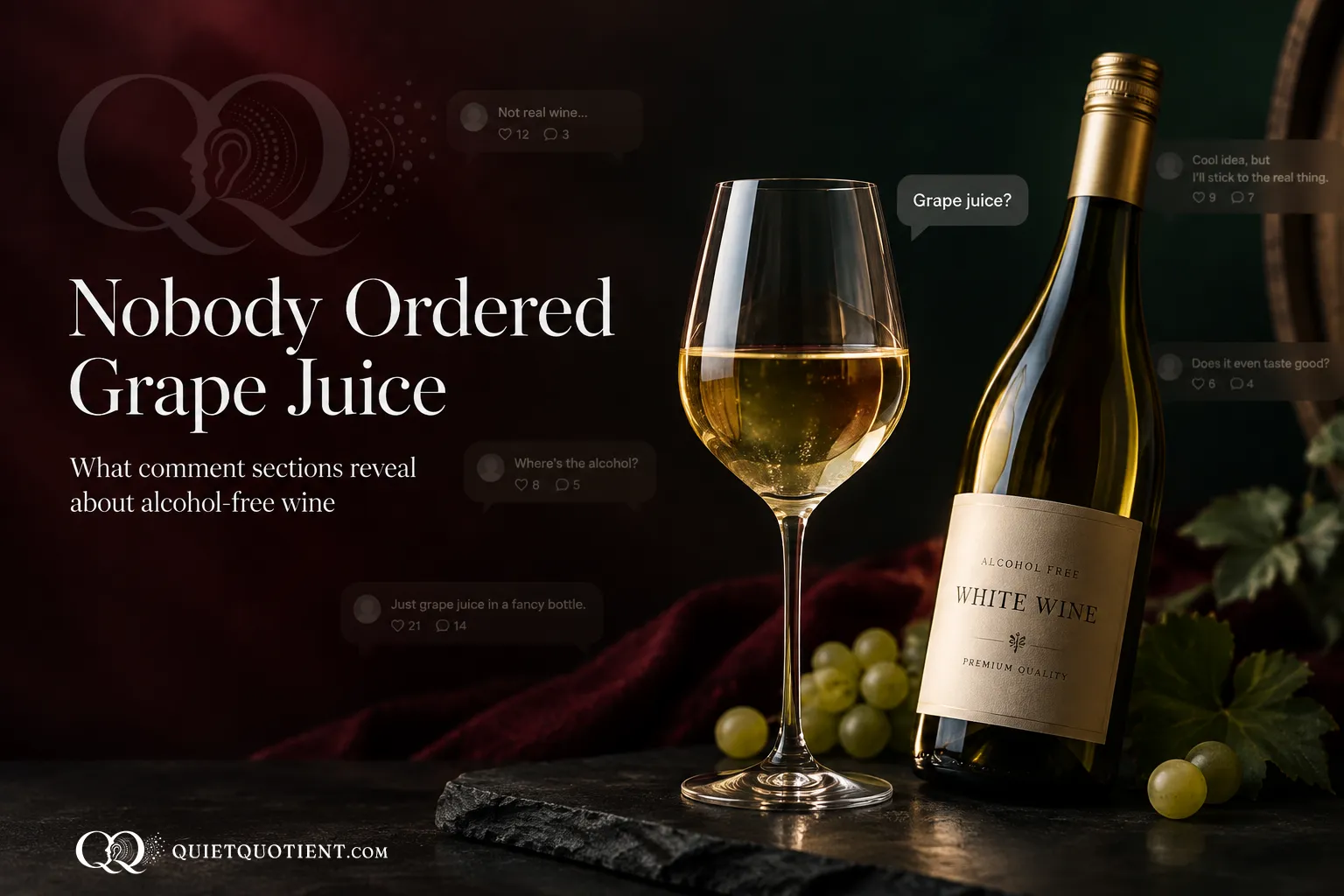
With an estimated market share of 1.5 percent, Germany is one of the most important markets for the non-alcoholic wine in the EU.
Source: Comment section of a documentary on European winemakers pivoting to alcohol-free wine (YouTube, video ID SLntIypiacE). 146 comments from 110 unique authors, exported 27 July 2026, coded manually into 10 thematic frames. Engagement weighting based on 480 total likes. Small sample, single video, one comment window: treat this as directional signal, not representative survey data.
the fight is over the word, not the drink
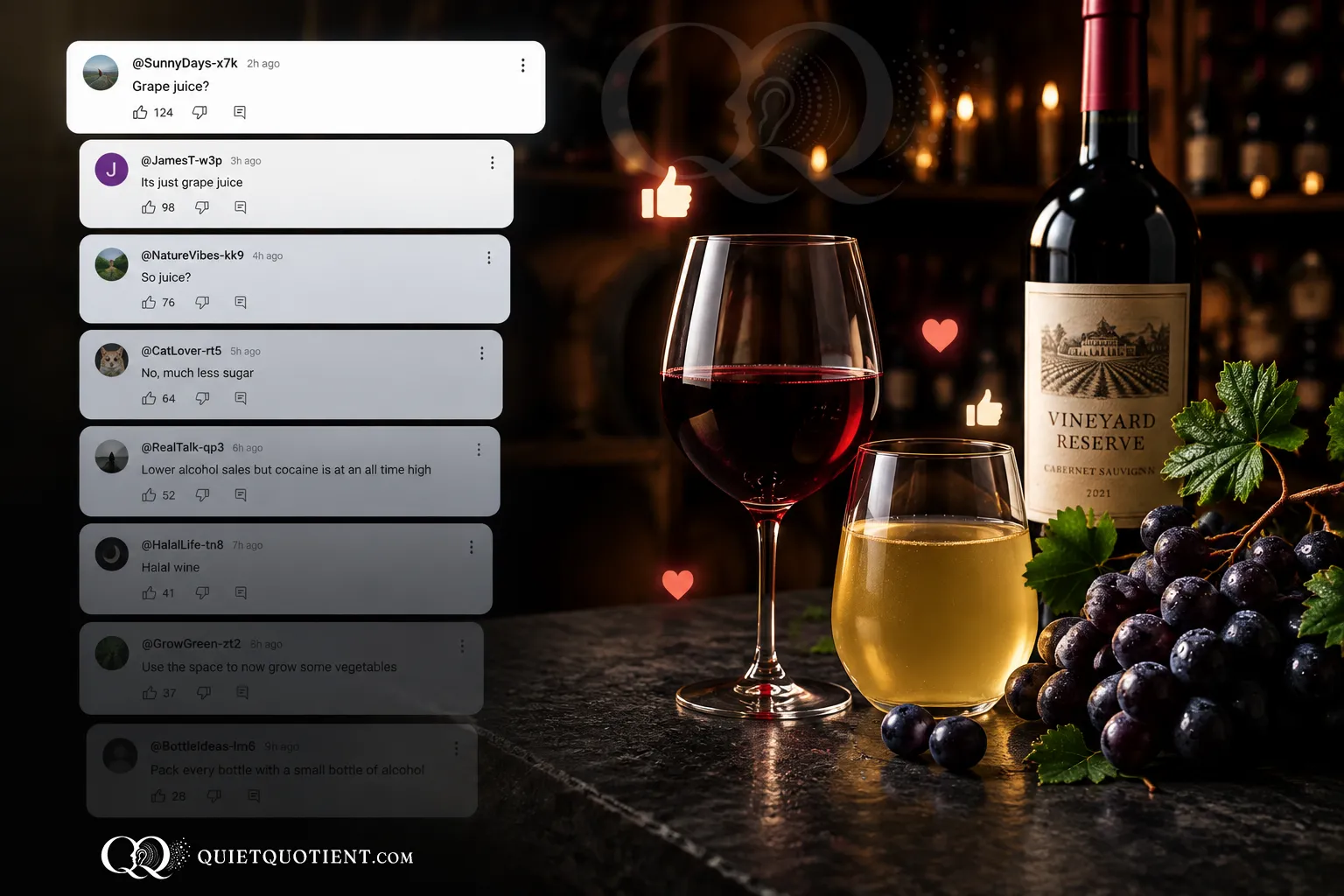
The single most-liked comment in the entire thread is two words long: “Grape juice?” (71 likes). Add its variants (“Its just grape juice”, “Fermented grape juice it is”, “So juice?”) and category denial captures 31% of all engagement in the thread while representing only 12% of comments. Nobody is arguing the product tastes bad. Almost nobody has tasted it. They are arguing it has no right to the word wine.
This is a naming legitimacy crisis, and it matters commercially: a product that people refuse to classify cannot be priced, gifted, or ordered without friction. Every alcohol-free wine brand is currently paying a semantic tax at the exact moment of consideration.
A natural message test already happened in the replies
The thread contains its own A/B test. When commenters pushed back on the grape juice frame, two rebuttal strategies emerged, and the audience voted with likes.
The craft and terroir argument (“fermentation unlocks flavors sommeliers describe with metaphors”, “heat, water, soil, geography all play a role”) performed respectably (up to 7 likes) but changed no minds visibly.
The sugar argument performed better pound for pound. One commenter simply replying “No, much less sugar” and “No, grape juice has huge amount of sugar” collected 9 and 7 likes on near-identical five-word replies. It is the only rebuttal in the thread that made the grape juice camp go quiet.
Implication: lead with the nutritional differential, not the romance. “Drier than juice, fraction of the sugar” is the message that survives contact with a hostile comment section. Terroir storytelling is for converts.
Five segments hiding in the thread, ranked by growth potential
1. The flavor-first abstainers (the invisible seniors)
The most articulate demand in the thread does not come from Gen Z. It comes from older drinkers who love wine and can no longer tolerate alcohol. One commenter: “As an older person I would enjoy a good quality, low alcohol red… I appreciate the craftsmanship, but not the effects of alcohol. Grapejuice is too sweet.” Another cites alcohol intolerance, another panic attacks, another 25 years of sobriety. These people know what oak, tannin and dryness mean, they explicitly reject juice as too sweet, and one states a precise willingness to pay: 1 to 1.5 euros above the alcoholic equivalent.
This inverts the industry’s Gen Z obsession. The comment section suggests the most motivated near-term buyer is health-constrained, 55 plus, and already fluent in wine. Nobody is marketing to them.
2. The zero-versus-low gap
Several commenters do not want 0.0%. They want 8 to 9% instead of today’s climate-inflated 14%, or “low alcoholic like kombucha”. One notes that climate change has pushed sugar and therefore alcohol levels up, making full-strength wine physically harder to drink. The industry is sprinting to zero while a chunk of demand sits in the underserved middle. A counter-signal from the UK: tax-driven low-ABV wines are described as “tasteless and not worth buying”, so the low segment carries a quality reputation debt that zero does not.
3. The California-sober substitution economy
The second most-liked comment (52 likes): “Lower alcohol sales but cocaine is at an all time high.” Add weed references, “California sober” self-identification, and fentanyl jokes, and substance substitution takes 16% of thread attention from only 7% of comments. Two commercial readings. First, the real competitor for the sober-curious dollar is increasingly THC beverages, not beer. Second, the “mindful generation” narrative that NA brands lean on is publicly contested: the crowd’s counter-story is substitution, not virtue. Brands building on the health halo should expect this exact heckle under every ad.
4. The halal-adjacent market that names itself
“Halal wine” appears spontaneously, unprompted, in at least five separate comments across the thread. That is organic category naming, and it points at a genuinely underserved global segment. But the same thread shows the cost: the halal mentions immediately triggered a hostile back-and-forth about religion in Europe. Any brand pursuing halal certification for dealcoholized wine inherits both the market and the culture war. The play exists, but it requires separate channels and packaging, not a sticker on the European shelf SKU.
5. The ritual preservers and the modularity idea
Buried at 15 likes is the most original product concept in the thread, contributed free of charge by a commenter: “Pack every bottle with a small bottle of alcohol. That way consumers would have the choice.” Dismiss the literal mechanics, keep the insight: what people defend is not ethanol, it is dosage control and the ritual. Products that let the drinker modulate (blending formats, spritz-style serves, one-glass-strong household formats) attack the “not real wine” objection sideways instead of head-on.
Watchouts
The price tolerance band is narrow. The same UK commenter who says there is “a gap in the market” also refuses to pay more for the alcohol-free version even while understanding it costs more to produce. Willingness to pay a premium exists but appears capped around 1 to 1.5 euros. Above that, the grape juice heckle becomes a purchase blocker.
Hard rejection is identity, not ignorance. The wine-is-wine camp (10% of comments) includes people who quit drinking entirely and still call NA wine pointless, “a tease”, “tobacco without nicotine”. They are unconvertible and loud. The correct strategy is to stop arguing with them; every fermentation lecture aimed at them feeds the algorithm, not the funnel.
The land-use legitimacy question is coming. The third most-liked comment (26 likes) is not about wine at all: “Use the space to now grow some vegetables.” Combined with sympathy for underpaid pickers and Eastern European labor, there is a quiet ESG storyline forming around what vineyards are for. Provenance and fair-labor storytelling has an open lane here, and dealcoholized wine can plausibly claim it kept farms alive.
Share of voice versus share of attention
| Theme | % of comments | % of likes (attention) |
|---|---|---|
| Grape juice reductionism (category denial) | 12.3 | 31.2 |
| Substance substitution (weed, coke, California sober) | 6.8 | 16.0 |
| Agri-economics, labor, climate, regulation | 13.0 | 9.8 |
| Anti-alcohol moralists | 3.4 | 6.9 |
| Hard rejectors (wine is wine) | 10.3 | 6.9 |
| Educators and rebuttals (sugar, fermentation, craft) | 6.8 | 6.7 |
| Intenders and demand signals | 10.3 | 6.7 |
| Religious and halal frame | 8.2 | 4.8 |
| Business admiration | 4.1 | 4.4 |
| Pro-wine health claims and conspiracy fringe | 4.8 | 0.4 |
Note the two biggest gaps. Category denial punches at 2.5 times its comment share, meaning the grape juice joke is the thread’s applause line. Meanwhile intenders, the actual buyers, generate real volume (10% of comments) but little applause (7% of attention). Demand in this category is quiet and mockery is loud, which is exactly why sales data and comment sentiment will keep telling opposite stories.
The one-line takeaway
The Internet has already renamed the product.
The alcohol-free wine market’s biggest marketing problem is not taste, price, or awareness. It is that the internet has already renamed the product, and the only rebuttal that lands is about sugar.
Have you noticed there is a new segment in the wine industry?
Alcohol-free wine
You might ask yourself how that is even possible, because making wine alcohol-free is not the same as producing alcohol-free beer. Brewers have a shortcut: they can stop fermentation early or use yeasts that barely produce alcohol, and hops are strong enough to mask what the process takes away. Wine has none of that. Grape must is too sugar-rich to stop early, so the alcohol has to be physically removed afterwards, and one study measured up to 53% of aroma compounds lost in the process. Worse, appellation rules mean almost nothing can be added back to fix it. So producers have to capture the volatile aromas as they are stripped away, and fold them back in, drop by drop.
Winemakers are also afraid to lose their identity. Their true passion and signature on the liquid might get lost when the de-alcoholisation takes place.
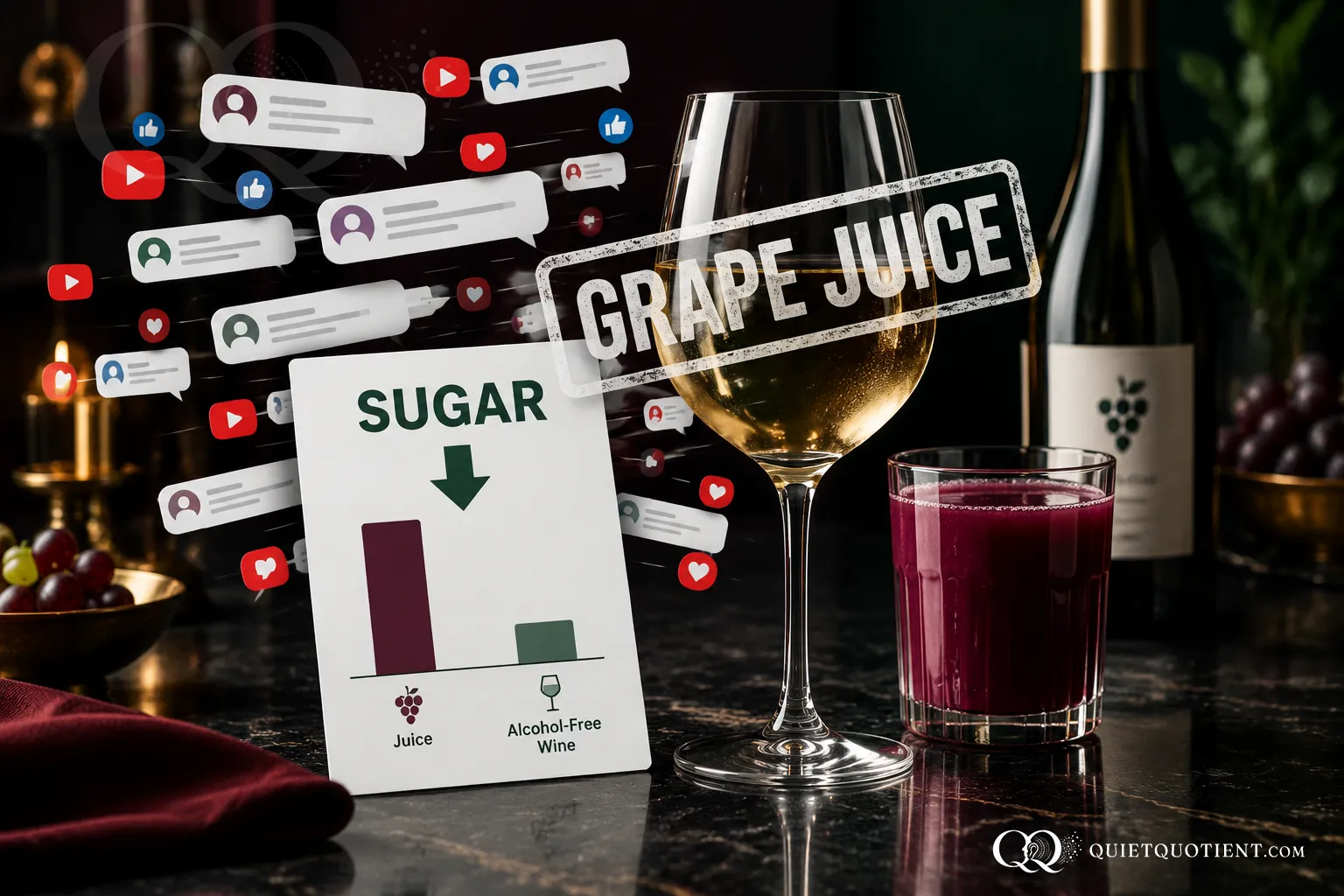
But the technical problem is only half of it. The commercial problem is that consumers have already renamed the product. I coded 146 comments under a documentary about winemakers going alcohol-free, and category denial (“it’s just grape juice”) captured 31% of all engagement from only 12% of the comments. Meanwhile the people signalling real buying intent made up 10% of the thread and won just 7% of the likes. Mockery is loud. Demand is quiet. The chart below shows that gap frame by frame.
Germany is already at around 2% of its domestic wine market, growing 25% in 2025, with 44% more households buying than the year before. France is still at about 1%. The gap is small today. I hope we don’t miss the opportunity in France.