
- The Method -
We go beyond what people say to understand why they say it and what a business can actually do about it.

- The 20 / 80 Depth -
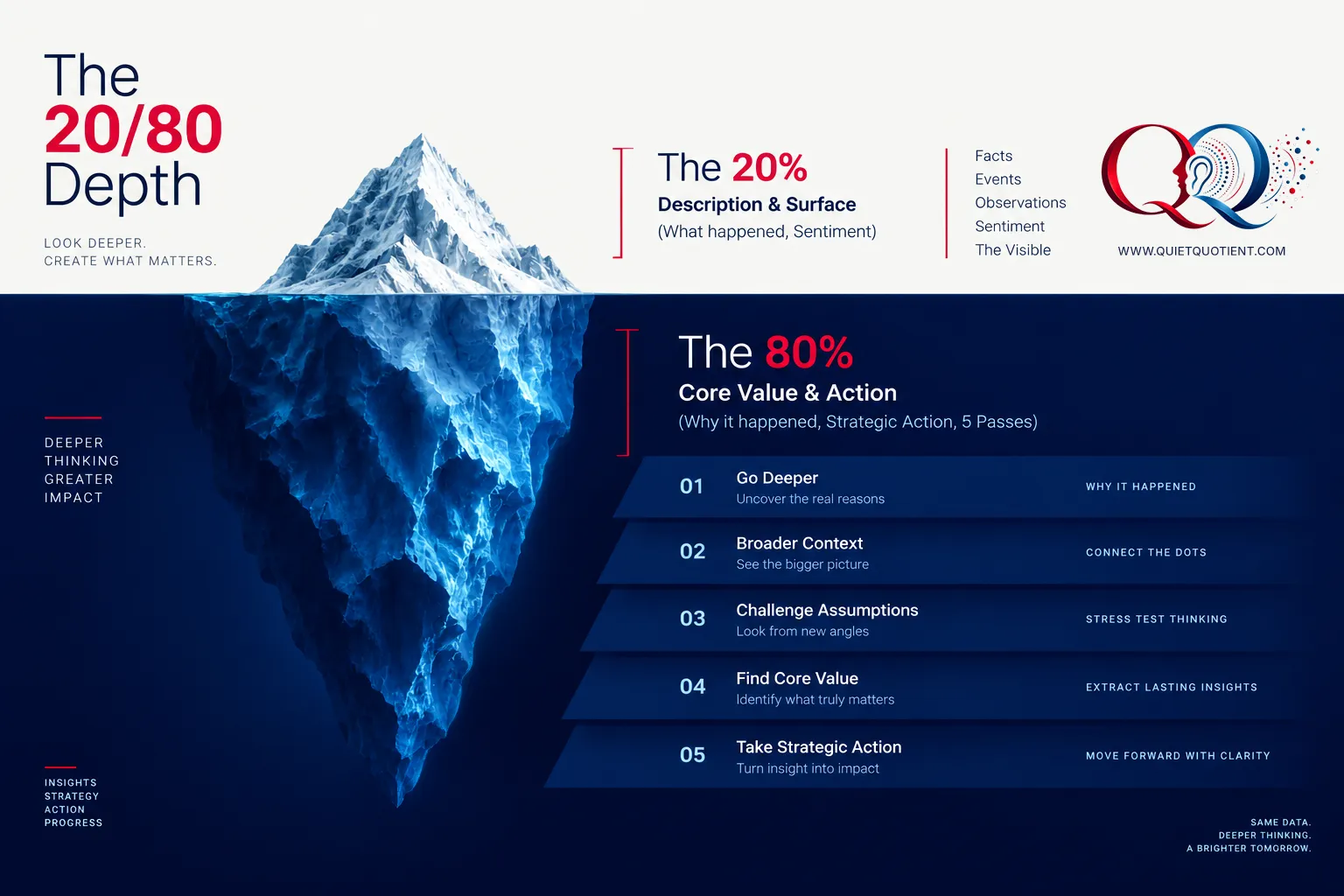
Most research stops at description, what people said, how sentiment moved.
That's useful, but it's the easy 20% of the work.
The value sits in the harder 80%, understanding why, and knowing what to actually do about it.
- The Five Passes -
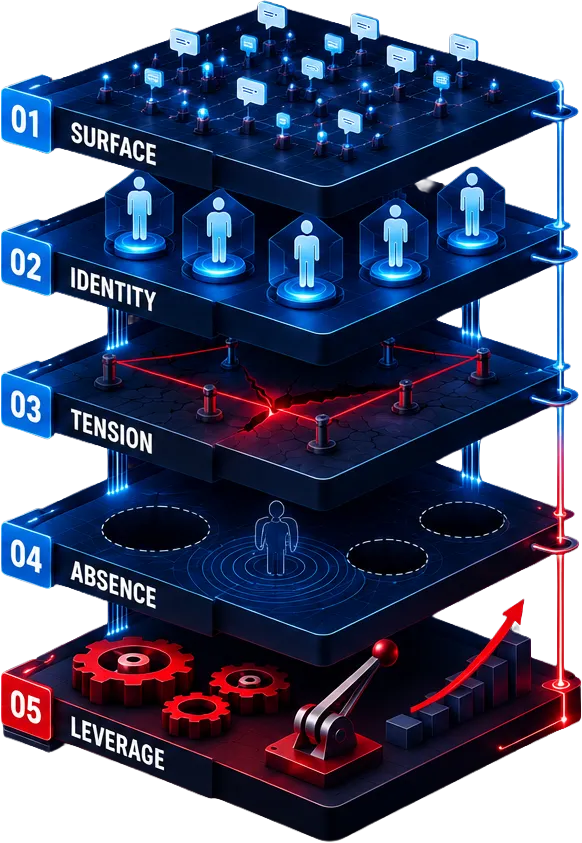
- AI + HUMAN -

Everyone will, soon enough.
Why this matters more than the tools
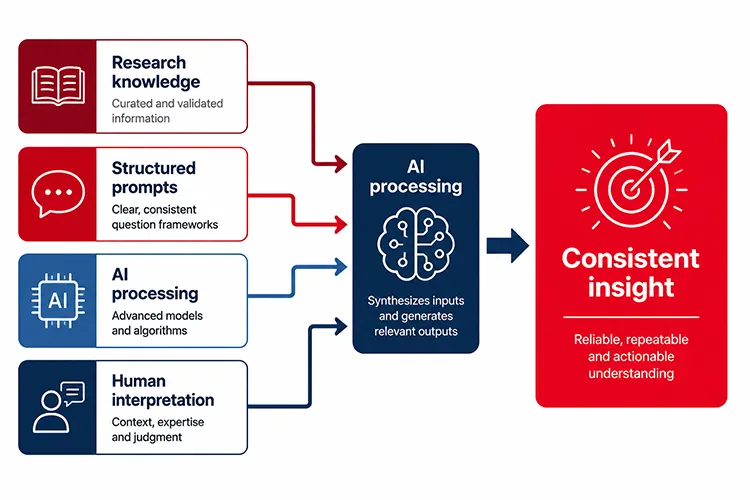
We use AI throughout this process, to move fast, to process real volume of conversation, to work at a pace a traditional research programme can't match. What AI doesn't do on its own is the interpretation, recognizing that a shift in language is a cultural signal, not just a pattern.
That judgment comes from applying the real cross-cultural and behavioral research training on top of the tools, not from the tools alone. You're not paying for someone who used AI. Everyone will, soon enough. You're paying for someone who used it and still had something worth saying that the tool alone wouldn't have produced.
- The system -
This method runs on a structured library of research prompts, built and refined over years of practical and academic work in European consumer research. It's what lets AI and human judgment work together consistently, project after project, rather than starting from scratch each time. The prompts do the processing. The thinking behind how they're built, and how their output gets interpreted, is the actual expertise.
Our approach draws on established thinking in cross-cultural psychology and consumer behavior, understanding how culture shapes what people value and how they express it, alongside marketing science focused on how brands actually grow and how meaning is built around them. We apply that thinking to conversation happening in the places people are most unguarded, forums, comment threads, and communities, not just the platforms built for broadcasting an opinion.
Tell us what you're trying to understand. It doesn't need to be fully formed.